
Choosing between a concrete patio and a paver system in Edmonton is a structural decision driven by climate, soil conditions, and long term maintenance tolerance. Athens Concrete approaches patio construction with a cold climate mindset, where frost movement, drainage control, and material behavior over time matter more than surface appearance alone.
Understanding how each system performs in Edmonton conditions helps homeowners avoid premature repairs and long term frustration.
Installation Differences and Base Preparation
The biggest difference between concrete patios and pavers starts below the surface. Installation methods determine how each system responds to soil movement and freeze thaw cycles.
Concrete patios are installed as a single reinforced slab. Proper installation requires:
- Excavation to frost appropriate depth
- Compacted granular base for drainage
- Reinforcement placement to control cracking
- Controlled pour and finishing conditions
Paver systems rely on layered base preparation rather than a single pour. Installation typically includes:
- Deeper excavation to accommodate multiple base layers
- Compacted granular base with precise grading
- Bedding layer for interlock pavers
- Joint stabilization using polymeric sand or similar materials
In Edmonton’s clay heavy soils, base preparation is critical for both systems, but failures tend to show differently over time.
Upfront Cost and Long Term Value
Initial cost is often a deciding factor, but it should be weighed against lifespan and repair complexity.
Concrete patios generally have:
- Lower upfront installation cost
- Faster installation timelines
- Fewer individual components to maintain
Paver systems often come with:
- Higher material and labour costs
- More intensive base preparation
- Higher initial investment
However, pavers allow for localized repairs, while concrete repairs are usually more visible. Long term value depends on how much maintenance and adjustment a homeowner is willing to manage.
Durability in Edmonton’s Climate
Edmonton’s freeze thaw cycles place constant stress on patio surfaces. How each system handles movement is a key difference.
Reinforced concrete resists compression well but will crack as the ground moves. When installed correctly, cracks are controlled and structural integrity is maintained. Poor drainage or inadequate reinforcement accelerates damage.
Interlock pavers tolerate movement differently. Individual units can shift slightly without surface cracking, but frost heave can create uneven areas if the base or joint stabilization fails.
Many homeowners choose concrete installation services for patios because properly reinforced concrete performs predictably under load and winter exposure when installed to cold climate standards.
Maintenance and Winter Care
Maintenance expectations vary significantly between systems.
Concrete patios typically require:
- Periodic sealing to reduce moisture absorption
- Careful use of de icing salts
- Crack monitoring over time
Paver patios require:
- Joint sand replenishment
- Weed control in joints
- Occasional re leveling of shifted areas
- Edge restraint inspection
Winter snow removal is similar for both, but aggressive ice melt products tend to affect concrete surfaces more visibly if sealing is neglected.
Aesthetic and Design Flexibility
Both systems offer design flexibility, but in different ways.
Concrete patios provide:
- Broom, exposed aggregate, or stamped finishes
- Clean transitions to steps and walkways
- Integrated edges and borders
Paver systems offer:
- Pattern variation through interlock layouts
- Color blending and texture options
- Easier integration with curved designs
For homeowners evaluating layout and long term use, reviewing residential patio options helps align design preferences with structural performance.
Which Patio System Fits Your Property
The right choice depends on site conditions and homeowner priorities.
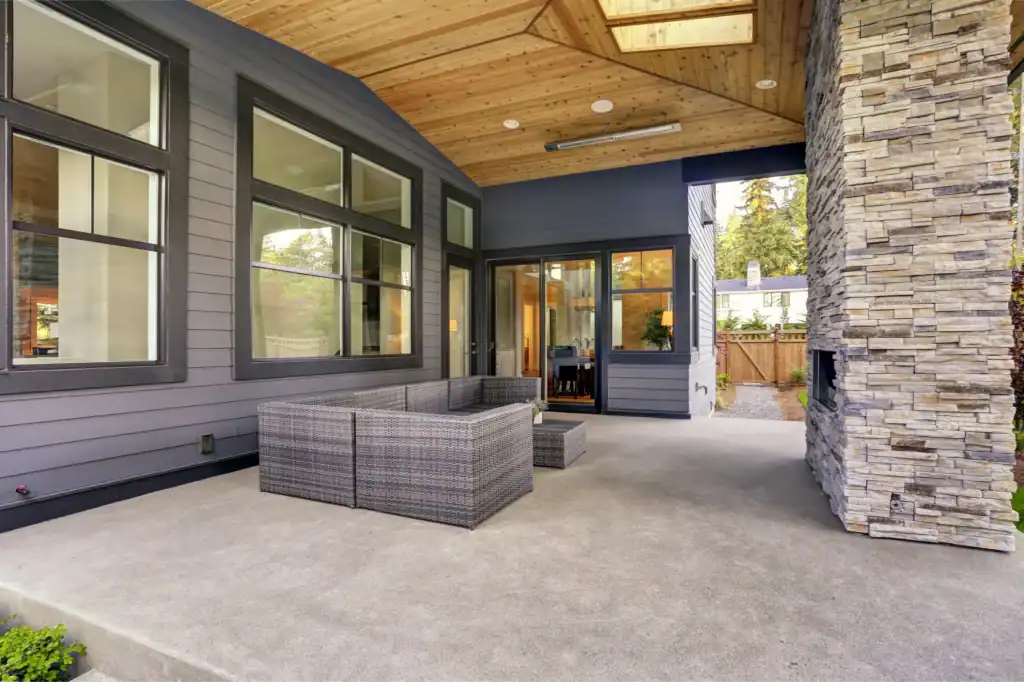
Concrete patios tend to suit:
- High traffic or furniture heavy areas
- Homeowners wanting minimal ongoing maintenance
- Properties with stable drainage conditions
Paver systems often suit:
- Areas with complex layouts
- Homeowners comfortable with periodic upkeep
- Properties where minor movement is expected
Soil composition, slope, drainage, and winter exposure should all factor into the final decision.
Making the Right Long Term Choice
Both concrete patios and pavers can perform well in Edmonton when installed correctly. The difference lies in how each system handles movement, maintenance, and long term wear. Understanding these differences before installation prevents costly changes later.
If you are deciding between a concrete patio and a paver system and want guidance based on your property conditions, you can book a patio quote to review installation options, costs, and long term expectations.