
Reinforced and post tensioned concrete slabs are the two primary structural systems used for industrial floors, and each is engineered to manage load, cracking, and long term performance differently. The right choice depends on equipment loads, joint tolerance, slab thickness limits, and operational demands such as forklift traffic or heavy machinery. Athens Concrete works with industrial clients to align slab design with functional performance rather than only material strength.
How Industrial Concrete Floors Are Designed for Load and Durability
Industrial slabs are designed around three main factors, load type, load frequency, and environmental exposure. Floors must support distributed loads such as stored goods, rolling loads from forklifts, and point loads from machinery legs or rack systems. Designers consider subgrade support, slab thickness, reinforcement strategy, and joint layout as a system.
Durability also depends on abrasion resistance, impact resistance, and shrinkage control. These factors influence cracking behavior, surface wear, and long term serviceability more than compressive strength alone.
What Is Reinforced Concrete Flooring
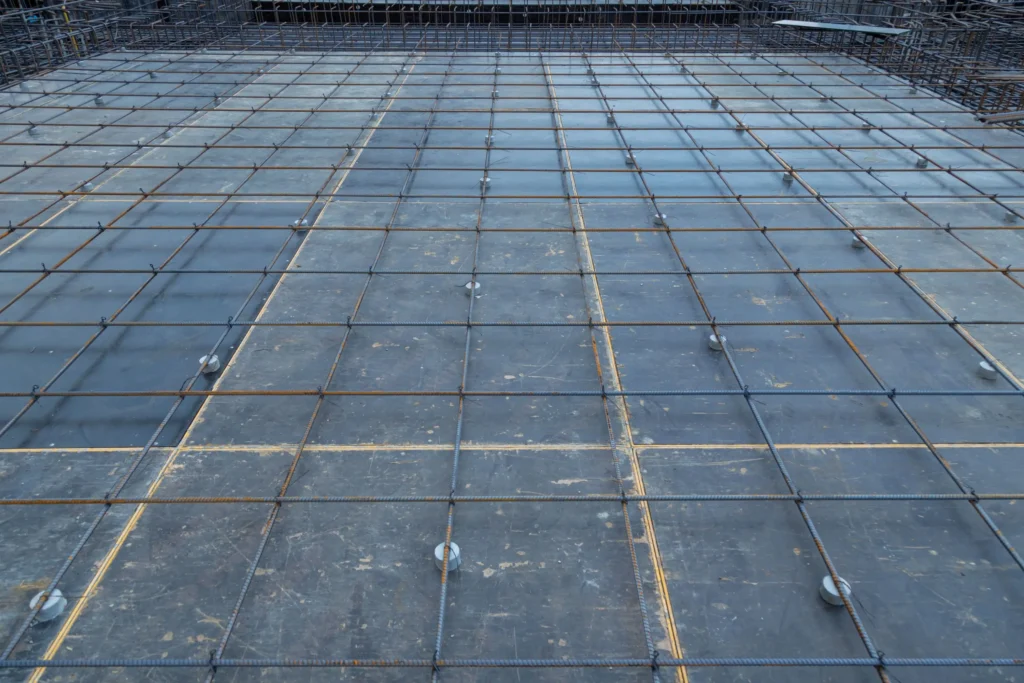
Reinforced concrete flooring uses embedded steel, typically rebar or welded wire mesh, to improve tensile capacity and control cracking. The steel does not prevent cracks from forming but limits their width and helps the slab maintain structural integrity after cracking.
Rebar Placement and Steel Mesh Systems
Rebar is typically placed in a grid pattern within the slab depth, often near mid depth or in upper zones depending on design. Proper placement matters because reinforcement too low or too high reduces effectiveness. Steel mesh provides distributed reinforcement but must be correctly supported during placement to remain at the intended depth.
Crack Control Through Distributed Reinforcement
Reinforcement placement affects crack control by spreading tensile stresses across many small cracks instead of fewer large ones. When steel is evenly distributed, shrinkage and temperature movement create fine, controlled cracking rather than wide separations that compromise durability.
Typical PSI Strength Ranges for Industrial Slabs
Industrial slabs commonly fall within compressive strength ranges of 4,000 to 6,000 PSI depending on load requirements and wear expectations. Higher PSI improves surface hardness and abrasion resistance but does not eliminate the need for reinforcement or joint planning.
Joint Spacing and Control Joint Strategy
Reinforced slabs rely on control joints to manage shrinkage cracking. Joint spacing is typically closer than in post tensioned systems, often based on slab thickness multiples. More joints mean more potential maintenance points, but they guide cracking to predictable locations.
Installation Process and Curing Considerations
Reinforced slabs follow conventional placement, finishing, and curing processes. Proper curing is critical to reduce shrinkage stress and improve strength development. Inadequate curing increases early cracking risk regardless of reinforcement.
What Is Post-Tensioned Concrete Flooring
Post tensioned flooring uses high strength steel cables, called tendons, placed within the slab and tensioned after the concrete gains initial strength. This introduces compression into the slab, counteracting tensile forces that normally cause cracking.
Tensioning Cables and Compression Forces Explained
When tendons are stressed, they compress the concrete internally. This compression offsets tensile stresses from loads and shrinkage. The result is a slab that resists cracking more effectively and can span greater distances with fewer joints.
Load Capacity and Performance Under Heavy Machinery
Post tensioned slabs often perform better under heavy point loads because internal compression reduces flexural cracking and deflection. This is valuable where equipment legs, rack posts, or concentrated machinery loads exist. Reinforced slabs can also support heavy loads but may require greater thickness or denser reinforcement to achieve similar performance.
Forklift traffic influences both systems. Repeated wheel loads create fatigue stress and surface wear. Slab design must account for wheel load magnitude, tire type, and travel patterns.
Cracking Resistance and Long-Term Slab Behavior
Reinforced slabs accept that cracking will occur and focus on controlling width. Post tensioned slabs aim to reduce crack formation altogether. Over time, fewer cracks generally mean reduced moisture intrusion, less joint deterioration, and improved long term surface condition.
Slab Thickness, Material Use, and Structural Efficiency
Post tensioning often allows thinner slabs because compression improves structural efficiency. Thinner slabs reduce concrete volume but add specialized materials and tensioning procedures. Reinforced slabs may require greater thickness to achieve the same span or load performance, increasing material use but using more conventional methods.
Cost Differences Between Reinforced and Post-Tensioned Systems
Initial cost differences depend on project size and complexity. Reinforced slabs use familiar labor and materials but may require more concrete and more joints. Post tensioned systems involve specialized installation and engineering but can reduce slab thickness, joint count, and long term maintenance exposure.
For industrial projects where floor performance directly affects operations, many clients compare options with an experienced industrial concrete contractor before selecting a system.
Which Industries Benefit Most From Each System
Reinforced slabs are common in:
• general warehouses
• light manufacturing
• storage facilities with moderate loads
Post tensioned slabs are often chosen in:
• high racking warehouses
• distribution centers with heavy forklift traffic
• facilities with large open floor areas
• buildings with heavy machinery or equipment bases
Durability, Maintenance, and Lifecycle Considerations
Long term performance depends on crack control, joint condition, and surface wear. Reinforced slabs may require joint repairs and crack sealing over time. Post tensioned slabs typically have fewer joints, reducing maintenance points, but repairs to damaged tendons require specialized procedures.
Lifecycle value depends on how well the slab supports operations without interruption. Facilities with strict flatness, heavy loads, or high traffic often prioritize systems that minimize cracking and joint distress. Project specific evaluation is important, and slab design questions can be discussed when requesting a concrete project quote to match floor performance with operational needs.